Save 50% on eerie tales using the code: proparanormal
K2 Meter – Functionality… Guts… & Proper Use
“A K2 meter does not detect ghosts. It detects changes in electromagnetic field strength. When unexplained EMF fluctuations occur under controlled conditions and coincide with other anomalies, such as an apparent EVP, environmental changes, or multiple witness observations, they become data points worthy of further investigation rather than evidence of paranormal activity on their own.”
I. T. Thompson
7/26/20268 min read
How the K2 Meter Works
At its core, the K2 is an electromagnetic field intensity meter.
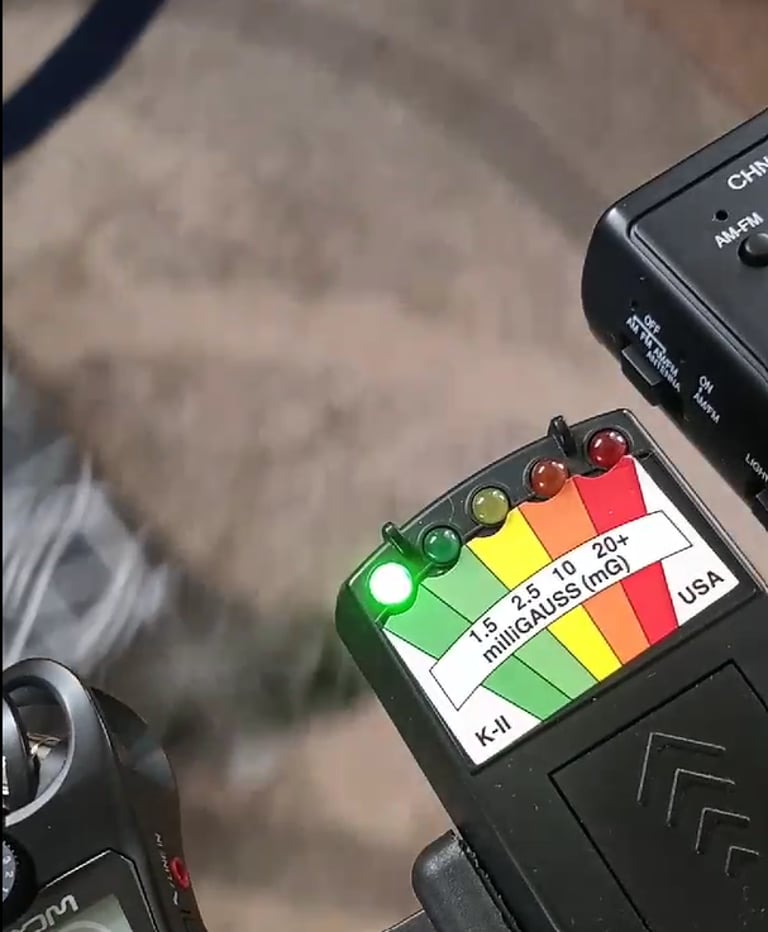
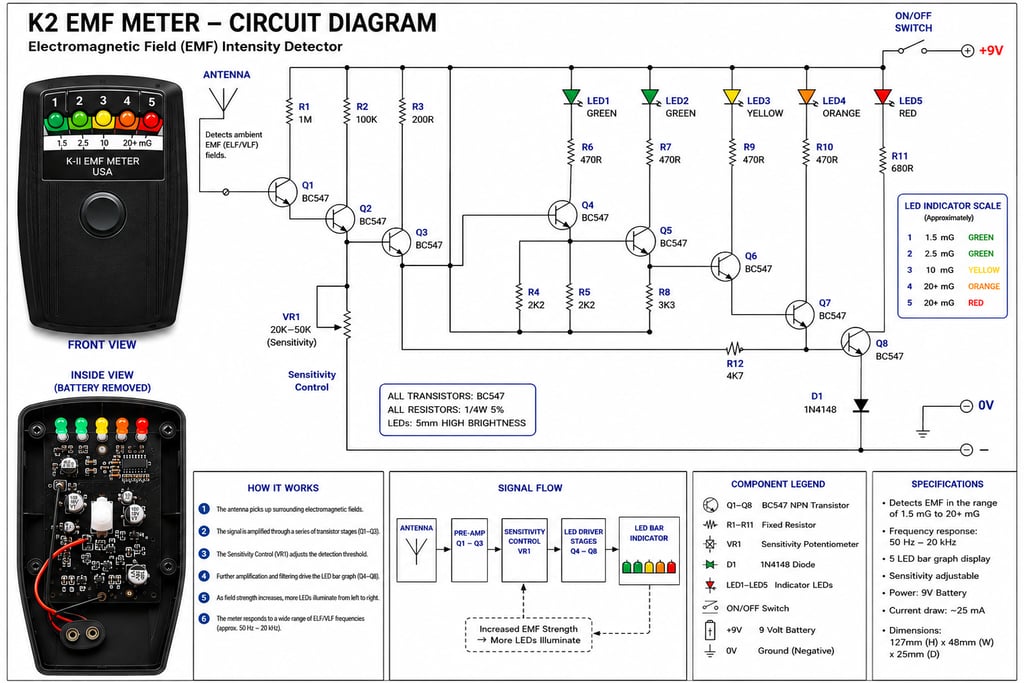
It detects changes in alternating electromagnetic fields generated by electrical equipment and displays the relative field strength using a row of five (note: two green) coloured LEDs.
Typical LED (light emitting diode) progression:
🟢 Green – 'ON' Indicator
🟢 Green – Low or background EMF
🟡 Yellow – Moderate EMF
🟠 Orange – Elevated EMF
🔴 Red – Strong EMF
The meter responds almost instantly to changes in the surrounding field, making it useful for identifying transient EMF spikes. It operates over the extremely low frequency (ELF) and very low frequency (VLF) ranges commonly associated with household electrical systems and other man-made sources.
LED Colour Approximate Field Strength Interpretation
🟢 Green 1.5–2.5 mG Normal background EMF. Typical in most indoor environments away from
electrical equipment.
🟡 Yellow 2.5–5.0 mG Slightly elevated EMF. May indicate nearby wiring, appliances, or
electronic devices.
🟠 Orange 5–10 mG Moderate EMF. Often detected near electrical cables, transformers, or
mains-powered equipment.
🔴 Red 10–20+ mG High EMF. Usually indicates close proximity to electrical equipment or a
strong EM field.
What is a Milligauss?
A gauss (G) is a unit used to measure magnetic field strength.
The K2 displays readings in milligauss (mG).
1 gauss = 1,000 milligauss
For comparison:
Earth's magnetic field is approximately 250–650 mG (0.25–0.65 G), depending on location.
The K2 is designed to measure alternating electromagnetic fields (AC EMFs), such as those produced by household electricity, rather than the Earth's relatively constant magnetic field.
Typical Readings During an Investigation:
Source Approximate Reading
Open countryside 0.5–2 mG
Historic building (no wiring nearby) 1–3 mG
Wall socket 5–20 mG
Extension lead 10–50+ mG
Television 20–100 mG
Microwave oven (close range) 50–300+ mG
Mobile phone during transmission Brief (pulsing) spikes depending on distance
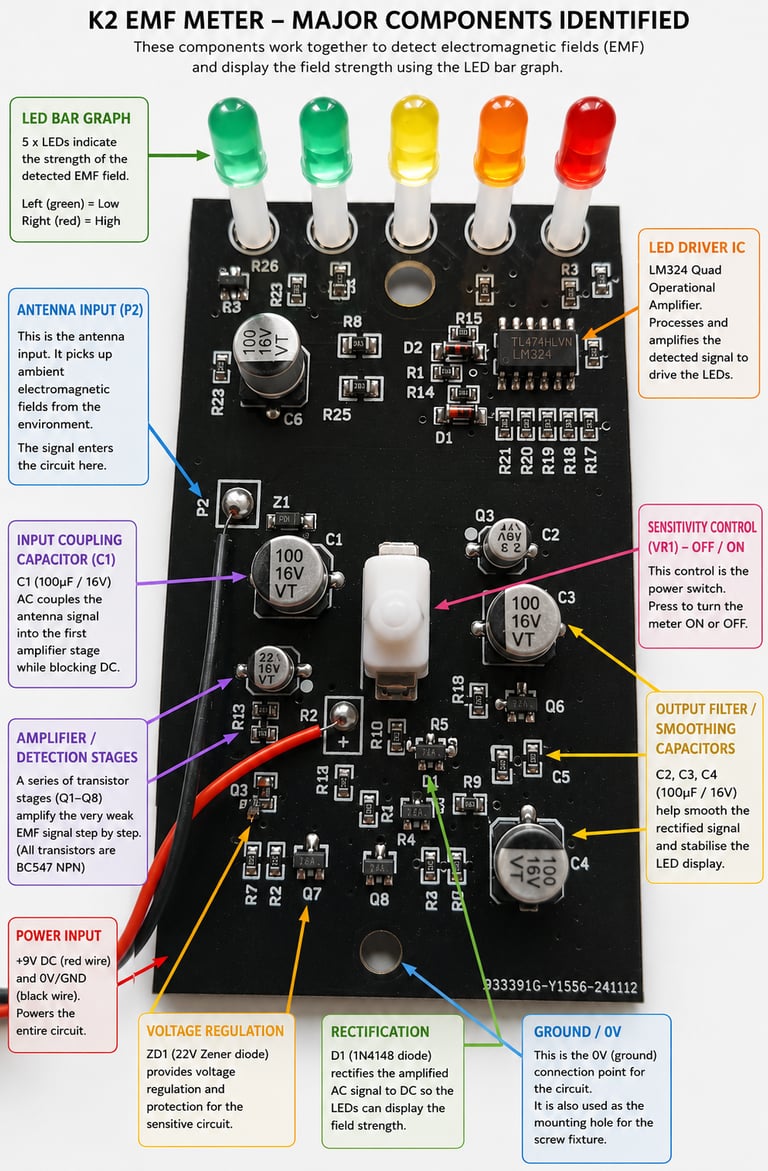
The K-II (commonly called the K2) meter is one of the most widely used instruments in paranormal investigations because it is simple, highly responsive, and provides an immediate visual indication of changes in the local electromagnetic field (EMF). Although it is frequently associated with ghost hunting, it was originally designed as an EMF detector, not as a device to detect paranormal phenomena.
What Does The K2 Actually Measure?
The K2 measures electromagnetic field strength, not "ghost energy."
Common sources include:
household wiring
extension leads
electrical sockets
transformers
mobile phones
Wi-Fi equipment
microwave ovens
electric motors
fluorescent lighting
radio transmitters
Because of this, investigators should always establish a baseline before interpreting unusual readings.
A Practical Investigation Example
Suppose you establish a baseline in a room, and the K2 remains steadily on the green LED (around 2 mG). During a recording session, it suddenly rises to the orange or red LEDs (10–20 mG) for a few seconds before returning to baseline. If there are no obvious electrical sources nearby and the event coincides with another observation, such as an unexplained sound, an apparent EVP, or multiple independent witnesses, it becomes a data point worth documenting and investigating further.
LED Behaviour of a K2 Meter
A K2 meter continuously samples the strength of the surrounding electromagnetic field. As the field changes, the LEDs respond almost instantly. Different electrical devices often produce different LED patterns because their EMFs vary over time.
Wi-Fi and Wireless Devices
Wi-Fi routers, mobile phones, Bluetooth devices, and other digital transmitters do not emit a perfectly constant signal. Instead, they send information in rapid bursts known as data packets.
When a K2 meter is brought close to an active Wi-Fi source, the LEDs often:
flicker rapidly
pulse irregularly
jump between two or more LEDs
brighten and dim repeatedly
The display appears "alive" because the transmitted signal strength changes from moment to moment as data is sent and received.
Example:
Green → Yellow → Green → Orange → Yellow → Green
or
Green → Orange → Red → Green → Yellow
The pattern is constantly changing rather than remaining steady.
Microwave Oven
A microwave oven operates very differently.
Although it generates microwave energy at approximately 2.45 GHz inside its cooking cavity, its power supply produces a relatively stable electromagnetic field while the magnetron is operating.
When standing close to a running microwave oven, the K2 usually shows:
one LED level
or several LEDs illuminated continuously
For example:
Green → Yellow → Orange → Red
...and it remains there... Constant.
If you move the K2 closer or farther away, the number of illuminated LEDs changes, but while the oven continues operating at a constant power level, the display often remains relatively steady.
This particular EMF anomaly was first recorded during The Bohlandor Haunting: Three Spirits and a Demon while demonstrating EMF detection techniques to the homeowner. During the demonstration, the elevated EMF reading appeared to move from room to room without any observable source, producing a pattern consistent with a mobile electromagnetic emitter, such as a microwave oven being carried through the property. A search of the area failed to identify any electrical device capable of producing the readings. The anomaly eventually remained stationary at the foot of the staircase.
Household Wiring
Mains wiring carrying alternating current (50 Hz in the UK and most of Europe, 60 Hz in North America) tends to produce a stable electromagnetic field when the electrical load is constant.
Near a wall containing electrical cables, the K2 commonly displays:
Green + Yellow
or
Green + Yellow + Orange
...remaining steady unless an appliance switches on or off.
Mobile Phones
A mobile phone is similar to Wi-Fi but often produces stronger bursts.
During:
sending a text
making a call
uploading data
...the K2 may flash dramatically:
Green → Yellow → Orange → Red → Green
...within fractions of a second.
Why This Matters During Paranormal Investigations
Understanding these patterns helps investigators recognise common sources of EMF.
For example:
Rapid, irregular flickering often suggests a wireless communication device or intermittent electrical source.
A steady illumination usually indicates a continuous electromagnetic field from mains wiring or electrical equipment.
If a K2 meter suddenly rises and falls in an area where no obvious electrical source has been identified, and that observation should be documented. However, it should not be interpreted as paranormal without first investigating possible environmental causes.
Practical Advice for Investigators
One reason experienced investigators ask everyone to place their phones in airplane mode is that mobile phones and Wi-Fi devices can produce intermittent EMF bursts that resemble unexplained K2 activity. Eliminating known sources makes it easier to interpret any unusual readings that remain.
In summary:
“The K2 meter is not detecting ghosts, it is detecting changes in electromagnetic field strength. By learning how common electrical devices affect the meter, investigators can better distinguish expected EMF behaviour from observations that warrant further investigation.”
This emphasis on understanding the instrument's normal responses before considering more unusual explanations aligns well with an evidence-based investigative approach.
Why Paranormal Investigators Use a K2
Many investigators have reported instances where the meter displays sudden, isolated spikes in locations where no obvious electrical source is present.
Some investigators also use it as an interactive trigger object, asking questions such as:
"Can you light up the yellow light?"
or
"Can you make all the lights illuminate?"
These sessions are based on the belief that, if a paranormal entity could influence the local electromagnetic environment, it might produce observable changes on the meter.
It's important to note that there is currently no accepted scientific evidence demonstrating that spirits generate measurable EMFs or can influence EMF meters. This use remains part of paranormal investigation practice rather than established science.
Advantages
From an investigator's perspective, the K2 offers several practical benefits:
Fast response to changing EMFs.
Large LED display that's easy to see in the dark.
Compact and lightweight.
Long battery life (9V battery).
No audible beeping to contaminate audio recordings (On earlier models).
Simple one-button operation.
Limitations
Like any instrument, the K2 has limitations.
It is a single-axis meter
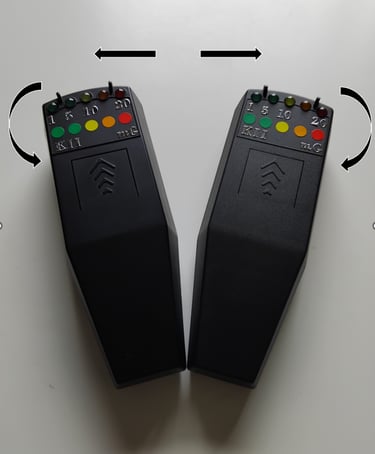
The reading depends on the meter's orientation relative to the EMF source. Rotating the device can change the displayed level even if the field itself hasn't changed.
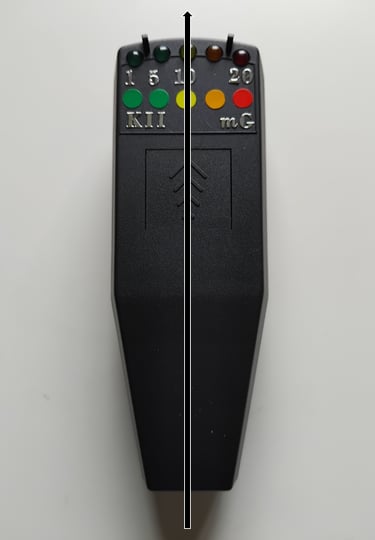
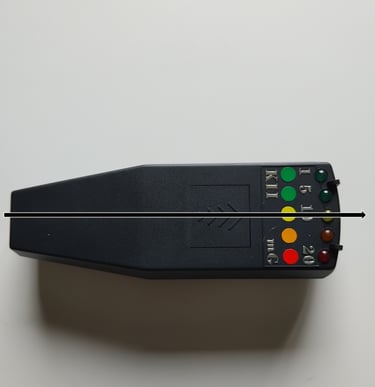
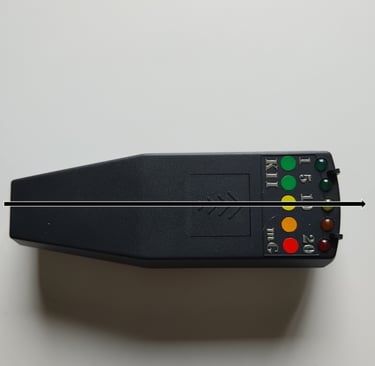
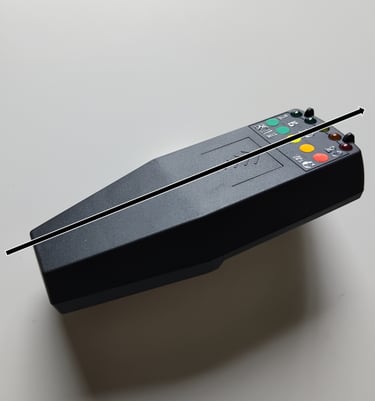
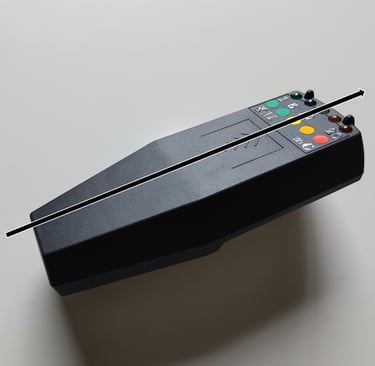
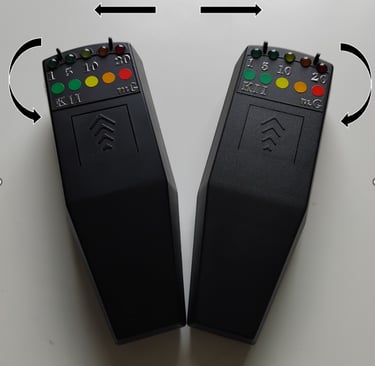
For consistent results, the K2 meter should be held in all six orientations systematically (six-axis survey). Because the internal antenna is directional, the meter's sensitivity can vary depending on how it is oriented relative to the electromagnetic field. Rotating the meter systematically helps determine whether a reading is directional or is present regardless of orientation.
**Do not wave it around like Mr. Spock trying to find alien life forms or violently shake the device.
Six-Axis K2 Survey
1. North (Forward)
Hold the K2 upright with the head of the device facing north. Observe the LED pattern for several seconds before recording the reading.
2. South (Reverse)
Rotate the meter 180° so the head is facing south. Compare the readings with the previous orientation.
3. East
Turn the meter 90° so the head is facing east. Watch for any increase, decrease, or intermittent LED activity.
4. West
Rotate the meter another 180° so the head is facing west. Again, observe whether the response changes.
5. Up
Tilt the K2 so the head of the device is pointing vertically upwards toward the ceiling. This checks for EMF sources above the instrument, such as wiring, lighting, or other equipment.
6. Down
Finally, point the head of the device toward the floor. This orientation helps identify fields originating beneath the investigation area, including buried electrical cables, basement wiring, or equipment below floor level.
Why Perform a Six-Axis Survey?
A six-axis survey provides a more complete assessment of the local electromagnetic environment. If the meter only responds in one orientation, it may indicate a directional EMF source. If similar readings occur in every orientation, the field is likely more uniform around the instrument.
When documenting K2 readings, record:
The meter orientation (North, South, East, West, Up, or Down).
The highest LED illuminated.
Whether the LEDs remained steady or pulsed.
The duration of the reading.
Any nearby electrical equipment or potential EMF sources.
Any coinciding observations, such as unusual sounds, temperature changes, or reported experiences.
Using a systematic six-axis method helps establish a reliable baseline and improves the repeatability of your investigation, making it easier to distinguish known environmental EMFs from observations that warrant further examination.
It does not identify the source
The meter can tell you that an EMF is present, but not what is producing it.
It cannot distinguish natural from paranormal causes
A spike could result from:
concealed wiring
a nearby mobile phone
radio transmissions
electrical equipment cycling on or off
countless other environmental sources
For this reason, careful baseline testing is essential.
Good Investigation Practice
When using a K2 meter, it's good practice to:
Survey the location before beginning.
Identify known electrical sources.
Put mobile phones into airplane mode (if practical).
Keep radios and transmitters away from the meter.
Record the meter continuously on video.
Correlate any spikes with other data, such as audio recordings, environmental conditions, witness observations, or other instruments.
The strongest cases are those where multiple independent observations occur together rather than relying on a single K2 reading.
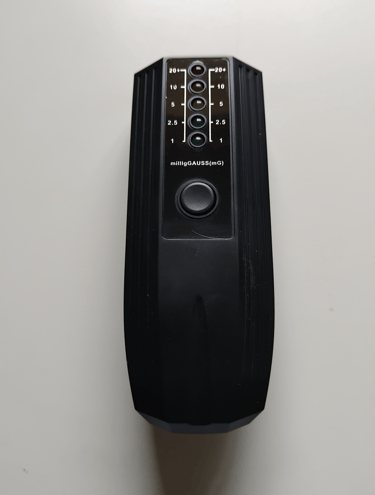
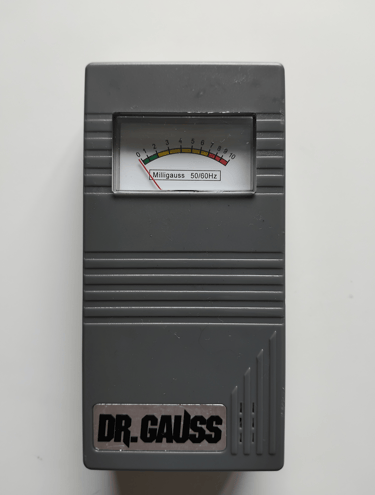
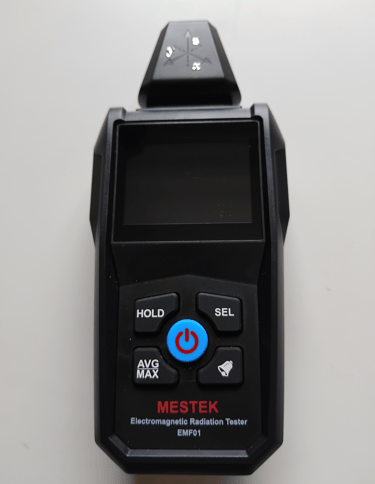
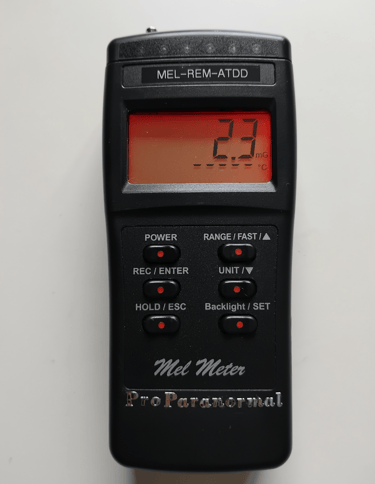
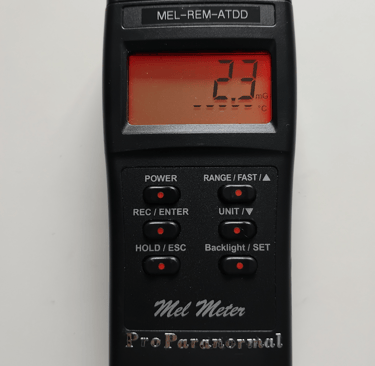
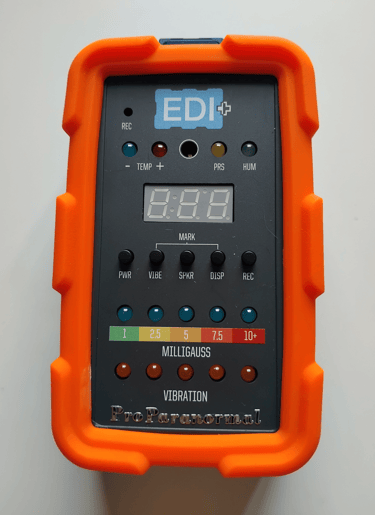
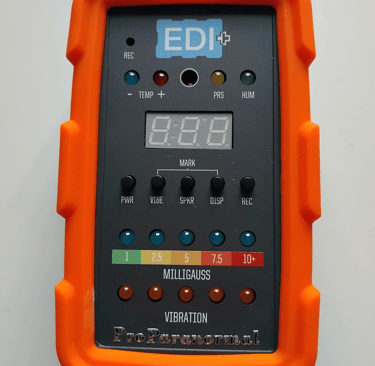
Other types of Electromagnetic (EMF) meters
Scientific Perspective
From a scientific standpoint, the K2 is simply an EMF detector. It measures variations in electromagnetic fields and performs that function effectively.
The interpretation of unexplained spikes is where opinions diverge. Some investigators view isolated, contextually relevant EMF changes as potentially significant, while mainstream science has not established a causal link between EMF fluctuations and paranormal phenomena. Therefore, K2 readings should be treated as observations requiring further investigation…
And not as proof of a haunting!
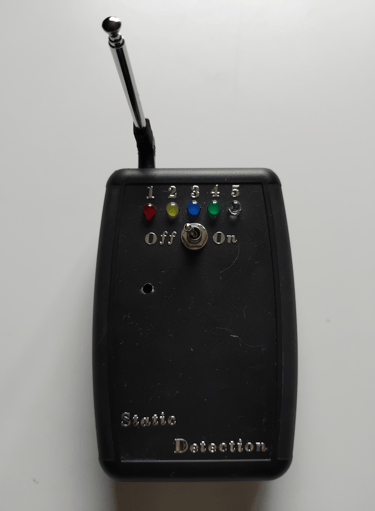
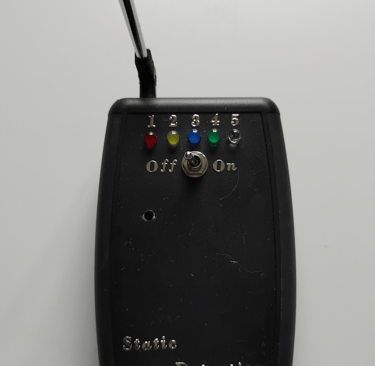
Basic Compact EMF meter
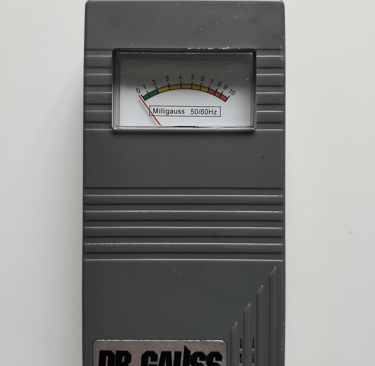
DR. GAUSS ANALOGUE ‘EMF’ METER
MEL METER 8704R-REM-ATDD
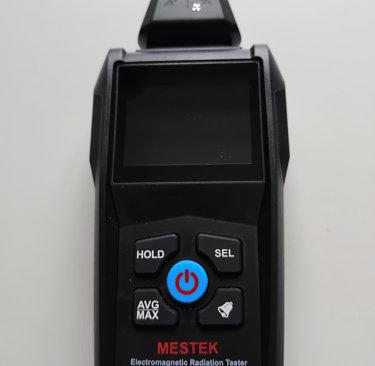
MESTEK EMF01 Electromagnetic Radiation Detector
EDI+ EMF Geophone
Para4ce REM Master
Up - Down
East - West
North - South
Violently Shaking
ProParanormal:
Pro-efficient
Pro-active
Pro-fessional
Contact
© ProParanormal 2026 All rights reserved.
info@proparanormal.com




Use code PROPARANORMAL to save an additional 50%
🔒 All submissions are encrypted via HTTPS and treated as confidential.